
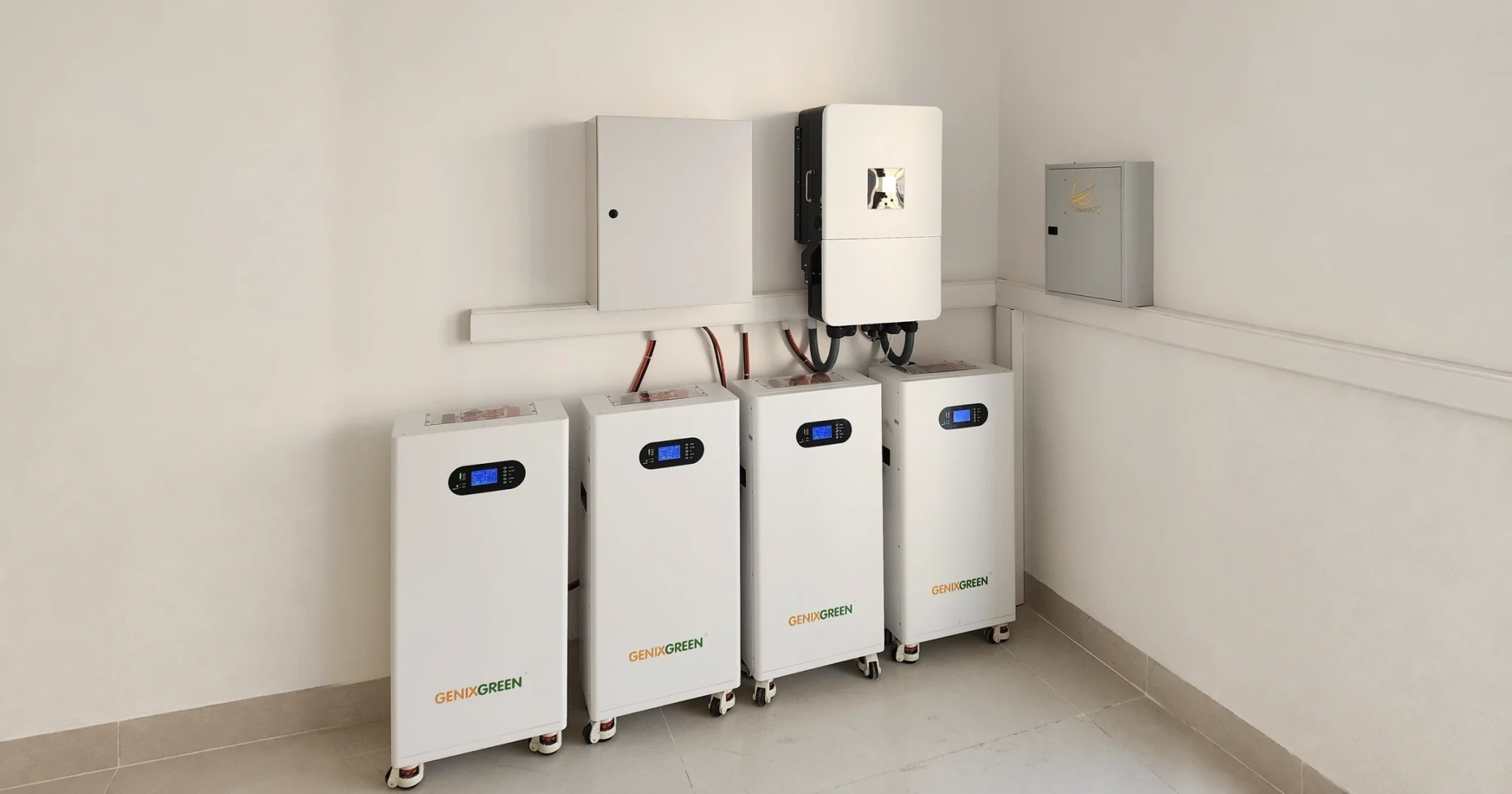
A 3 kW inverter may suit a small set of essential loads when their combined running demand and startup surges stay within its limits. It does not automatically cover every appliance in an apartment. Check the exact inverter’s backup output, the battery’s discharge capability, and the loads you intend to run together. Genixgreen has built LiFePO4 energy-storage systems in its own factory since 2011, and we will also be straight about what we stock, because our hybrid range starts a little above 3 kW for a reason that works in your favor. To compare sizes directly, see our 3 kW vs 5 kW inverter guide; to see the actual units, our product page.
The short answer: is 3 kW enough?
A 3 kW-class inverter may power selected essentials such as lighting, a router, and a compatible fridge or boiler, but the appliance list must be checked against actual running and startup demand. Electric heating and simultaneous motor starts can exceed the available output. Choose from measured requirements rather than the size of the home. Related comparison: 5 kW inverter guide; 3 kW vs 5 kW guide.
For a compatible battery, use the battery-to-inverter matching checklist.
What a 3 kW inverter runs
A 3 kW-class inverter can support a selected combination of essentials only after the actual load list and startup demand have been checked. A fridge, LED lights, a router, a television, laptops, and a boiler controller may fit on one installation, but their ratings and any simultaneous motor starts decide the result. High-wattage appliances such as an electric kettle, immersion heater, or air conditioner can use most or all of the available output. Add the continuous watts of what you would truly run at once, then check the model’s documented surge capability with our inverter sizing guide.
Continuous vs. surge: the fridge and pump problem
This is the number that catches out 3 kW buyers. A fridge compressor or a water pump does not draw its steady running wattage at the moment it starts; it pulls several times that for a fraction of a second, an inherent property of electric motors. A fridge that runs at 150 watts can demand several hundred at startup, and a small 3 kW inverter with little surge headroom can trip on that spike even though the running load looks tiny. This is exactly why sizing to surge, not just to average watts, matters most at the smaller end, and why a unit with generous surge headroom is worth more than a bigger number on paper. Note too that appliance labels sometimes show volt-amperes rather than real watts, which differ once power factor is counted.
Why smaller systems need more care
A fridge or pump start consumes a larger share of a 3 kW power budget than it does on a larger inverter. Conservative sizing reduces nuisance trips during normal household use.
Why pure sine wave matters at 3 kW
At any size, but especially when a home leans on a single smaller inverter, the waveform matters. Check that the exact inverter provides a pure sine-wave output where your appliances require it, and confirm compatibility with the appliance documentation. Modified or square-wave output can be unsuitable for some motors, compressors, and controls. Our gas boiler backup guide explains the separate boiler-use case.
3 kW vs. what we stock: right-sizing up
Our current hybrid inverter range begins at 5.5 kW, so we do not offer a 3.0 kW unit. A higher-rated inverter may provide additional output and surge margin, but it is appropriate only when the documented load case, battery configuration, electrical service, and current model specifications support it. A grid-interactive hybrid inverter must use equipment and settings that meet the applicable interconnection requirements, including separation from the grid during an outage [Source]. To see current specifications and request a quote, visit our product page; dealers and installers can find terms on our partners page.
Matching it to your battery
An inverter’s power sets what you can run at once; the battery sets how long. Choose the inverter for the verified peak load and the battery for the required runtime. Our battery runtime guide turns your loads and target hours into a battery size. Confirm the permitted battery voltage, discharge capability, and communication requirements from the exact inverter and battery documentation. A lithium battery must not be charged below freezing unless its manufacturer explicitly supports the conditions and required temperature controls [Source].
Frequently asked questions
Is 3 kW enough for a house or apartment?
It may be, if the selected essentials, their running demand, and the largest startup surge all fit the exact inverter and battery configuration. Do not decide from the apartment size alone. Heavy loads such as an electric kettle, immersion heater, or air conditioning can exceed the available output, especially when they overlap.
Can a 3 kW inverter run a fridge?
It may, if the exact inverter’s documented surge capability and the battery’s permitted discharge can support the compressor start alongside the other selected loads. Do not judge from the fridge’s running watts alone; confirm the combined load case with the installer or manufacturer documentation.
Do you sell a 3 kW inverter?
We do not. Our hybrid inverter range starts at 5.5 kW, single-phase 48 V. A higher-rated unit can provide additional output and surge margin when the specified load case and battery configuration support it. Check the current model documentation and the product page before choosing.
Does a 3 kW inverter need a pure sine wave?
Check the appliance and inverter documentation. Motors, compressors, and sensitive electronics may require a pure sine-wave output, while modified or square-wave output can be unsuitable. Do not assume the waveform from the power rating alone.
Is 3 kW or 5 kW better for my home?
Neither is automatically better; it depends on the actual running load, startup demand, battery capability, and electrical service. Compare the documented load case with the exact inverter specifications rather than choosing by apartment or house size alone. Our 3 kW vs 5 kW guide helps frame that comparison.
The right next step
A 3 kW-class inverter may support selected essentials, but the numbers that decide whether it works are the actual running load, startup surge, battery capability, and waveform, not the label. Size from the documented load case and check the current model specifications before choosing. Compare sizes in our 3 kW vs 5 kW guide, check the buyer’s list in our inverter buying guide, see the unit on our product page, and if you sell or install in Ukraine, find how to work with us on our partners page.